

PG Department of Chemistry
.png)
The Department of Chemistry was established in 2015 with the objective of providing quality education and promoting research in various branches of chemistry. Since its inception, the department has been committed to academic excellence, fostering scientific temper, and developing analytical skills among students.
The postgraduate program (PG) was introduced in 2022, marking a significant milestone in the department’s growth and academic expansion. The department offers a well-structured curriculum that integrates theoretical knowledge with practical applications.
The department is equipped with well-maintained and spacious laboratories for Organic, Inorganic, and Physical Chemistry. The laboratories are furnished with essential instruments and apparatus to carry out qualitative and quantitative analysis, synthesis, and various experimental techniques. Proper safety measures, adequate ventilation, and necessary chemical storage facilities are ensured to provide a safe working environment for students.
The faculty members are highly qualified, experienced, and dedicated to guiding students in both academics and research. The department also encourages students to participate in seminars, workshops, and project work to enhance their knowledge and skills.
FYUGP
The Four Year Undergraduate Programme (FYUGP) is an innovative academic framework designed in alignment with the National Education Policy (NEP 2020), offering students a flexible, multidisciplinary, and outcome-based learning pathway. The programme integrates core discipline knowledge with skill development, research exposure, internships, and value-added courses to ensure holistic development. With multiple entry and exit options, students can earn certificates, diplomas, or degrees based on their duration of study. FYUGP emphasizes experiential learning, academic mobility, and credit-based progression, enabling learners to tailor their academic journey while enhancing employability, research aptitude, and higher-education readiness.

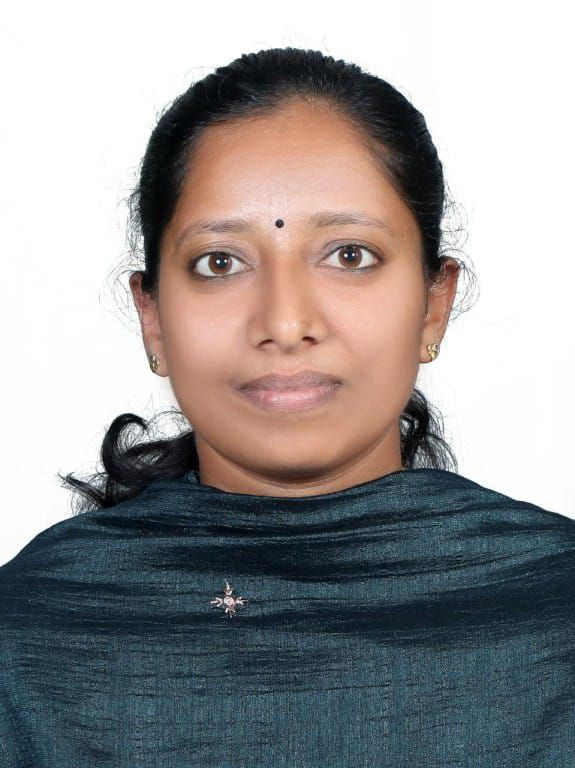
NISHA N
Asst.Prof.
NISHA N

Dr. Gayathri K
Assistant Professor
Dr. Gayathri K
B.Sc. Chemistry honours
40


Major Course
The Major Course forms the core academic component of the Four Year Undergraduate Programme (FYUGP), providing in-depth knowledge and conceptual mastery in the chosen discipline. It is structured to develop strong theoretical foundations, analytical thinking, problem-solving skills, and subject-specific competencies. The curriculum progressively advances from fundamental principles to advanced topics, integrating practical sessions, laboratory work, projects, and research exposure wherever applicable. Through outcome-based learning and continuous assessment, the Major Course prepares students for higher studies, competitive examinations, research opportunities, and professional careers aligned with their field of specialization.
- SemesterMajorSemester 1INORGANIC CHEMISTRY I -CHE1CJ101/CHE1MN100Semester 2PHYSICAL CHEMISTRY–I: STATES OF MATTER-CHE2CJ101/CHE2MN100Semester 31.THEORETICAL CHEMISTRYI: BASIC QUANTUM CHEMISTRY-CHE3CJ201 2.ORGANIC CHEMISTRY1-CHE3CJ202/CHE3MN200Semester 41.INORGANIC CHEMISTRY-II-CHE4CJ203 2.ORGANICCHEMISTRY-II-CHE4CJ204 3.PHYSICALCHEMISTRY–II: CHEMICALTHERMODYNAMICS, KINETICS&SURFACE CHEMISTRY-CHE4CJ205Semester 51.THEORETICAL CHEMISTRYII: GROUP THEORY AND MOLECULAR SPECTROSCOPY-CHE5CJ301 2.INORGANIC CHEMISTRY-III-CHE5CJ302 3.ORGANIC CHEMISTRY-III-CHE5CJ303 4.ELECTIVE COURSE1 IN MAJOR-GREEN CHEMISTRY-CHE5EJ301 5.ELECTIVE COURSE 2 IN MAJOR-NANO SCIENCE AND NANO TECHNOLOGY-CHE5EJ 302Semester 61.INORGANIC CHEMISTRY-IV-CHE6CJ 304/CHE8MN304 2.ORGANIC CHEMISTRY-IV-CHE6CJ 305/CHE8MN305 3.PHYSICAL CHEMISTRY–III: CHEMICAL AND PHASE EQUILIBRIA, ELECTRO CHEMISTRY AND PHOTOCHEMISTRY-CHE6CJ306/CHE8MN306 4.ELECTIVE COURSE 3 IN MAJOR-POLYMER CHEMISTRY- CHE6EJ311 5.ELECTIVE COURSE 4 IN MAJOR-INDUSTRIAL CHEMISTRY- CHE6EJ312Semester 71.THEORETICAL CHEMISTRY III: ADVANCED QUANTUM CHEMISTRY-CHE7CJ401 2.INORGANIC CHEMISTRY-V-CHE7CJ402 3.ORGANIC CHEMISTRY V-CHE7CJ403 4.PHYSICAL CHEMISTRY IV: STATISTICAL THERMODYNAMICS-CHE7CJ404 5.INSTRUMENTAL METHODS OF ANALYSIS-CHE7CJ405Semester 81.INORGANIC CHEMISTRY-VI-CHE8CJ 406/CHE8MN406 2.ORGANIC CHEMISTRY-VI-CHE8CJ407/CHE8MN407 3.PHYSICAL CHEMISTRY-V: ADVANCED TOPICS IN SOLID STATE AND ELECTRO CHEMISTRY-CHE8CJ408/CHE8MN408
Minor Course
The Minor Course under the Four Year Undergraduate Programme (FYUGP) provides students with an opportunity to gain structured knowledge in a discipline other than their major area of study. It promotes interdisciplinary learning and broadens academic exposure by enabling students to develop complementary skills and cross-domain competencies. The Minor curriculum is carefully designed to offer foundational and intermediate-level understanding of the selected subject, integrating theory with practical or skill-oriented components where applicable. This pathway enhances academic flexibility, supports diverse career aspirations, and strengthens students’ adaptability for higher studies, research, and emerging multidisciplinary professions.
- SemesterMinor course DetailsSemester 1BASICINORGANIC CHEMISTRYAND METALLURGY- CHE1MN 104Semester 2STATES OF MATTER AND NUCLEAR CHEMISTRY-CHE2MN104Semester 3ORGANIC CHEMISTRY IN DAILY LIFE-CHE3MN 204
The Multi-Disciplinary Course (MDC)
The Multi-Disciplinary Course (MDC) is a distinctive component of the Four Year Undergraduate Programme (FYUGP) designed to foster interdisciplinary exposure and holistic intellectual development. MDCs enable students to explore subjects beyond their Major and Minor disciplines, encouraging integrative thinking and cross-domain understanding. These courses are structured to address contemporary themes, emerging technologies, societal challenges, and skill-oriented areas, thereby broadening academic perspective. By promoting analytical reasoning, creativity, and real-world problem-solving across disciplines, MDCs enhance academic flexibility and prepare learners for dynamic career pathways and higher studies in multidisciplinary environments.
- Select SemesterAdd Course DetailsSemester 1MULTI-DISCIPLINARY COURSE1 ENVIRONMENTAL CHEMISTRY-CHE1FM105Semester 2MULTI-DISCIPLINARY COURSE2 CHEMISTRYINDAILY LIFE-CHE2F M 106


Postgraduation Course
Sree Gokulam Arts & Science College, affiliated to the University of Calicut, offers a range of postgraduate (PG) programmes designed to promote advanced learning, research aptitude, and professional excellence. The PG courses at the college provide students with in-depth subject knowledge, analytical skills, and exposure to contemporary developments in their respective fields.
The college offers postgraduate programmes across disciplines such as Science, Commerce, and Humanities, including M.Sc., M.Com, and M.A. courses. These programmes are structured in accordance with the curriculum and academic guidelines of the University of Calicut, ensuring quality, relevance, and academic rigor.
With experienced faculty, well-equipped laboratories, library resources, and a research-oriented academic environment, SGASC provides an ideal platform for students to pursue higher education. Emphasis is given to project work, seminars, and skill-based training, preparing students for careers in academia, industry, and research.
Admissions to PG programmes are conducted through the centralized admission process of the University, ensuring transparency and merit-based selection.
- SemesterMain Paper NameList of Courses offered1M.Sc. CHEMISTRY (CBCSS PATTERN)
- CHE1C01 Quantum Mechanics and Computational Chemistry
- CHE1C02 Elementary inorganic chemistry
- CHE1C03 Structure and reactivity of organic Compounds
- CHE1C04 Thermodynamics, kinetics, and catalysis
- CHE1L01 Inorganic chemistry practical I
- CHE1L02 Organic chemistry Practical I
- CHE1L03 Physical chemistry practical I
2M.Sc. CHEMISTRY (CBCSS PATTERN)- CHE2C05 Group theory and Chemical Bonding
- CHE2C06 Coordination chemistry
- CHE2C07 Reaction mechanism in Organic Chemistry
- CHE2C08 Electrochemistry, solid state chemistry, and Statistical Thermodynamics
- CHE2L04 Inorganic chemistry practical II
- CHE2L05 Organic chemistry practical II
- CHE2L06 Physical chemistry practical II
3M.Sc. CHEMISTRY (CBCSS PATTERN)- CHE3C09 Molecular spectroscopy
- CHE3C10 Organometallic &Bioinorganic chemistry
- CHE3C11 Reagents and Transformations in Organic Chemistry
- CHE3L07 Inorganic chemistry practical III
- CHE3L08 Organic chemistry practical III
- CHE3L09 Physical chemistry practical III
- CHE3E03 Green and Nanochemistry(Elective)
4M.Sc. CHEMISTRY (CBCSS PATTERN)- CHE4C12 Instrumental Methods of Analysis
- CHE4L10 Inorganic Chemistry Practical IV
- CHE4L11 Organic Chemistry Practical IV
- CHE4L12 Physical Chemistry Practical IV
- CHE4E04 Petrochemicals and Cosmetics(Elective)
- CHE4E08 Organometallic Chemistry
- CHE4P01 Research Project
- CHE4V01 Viva Voce
Addon Course
Sree Gokulam Arts & Science College offers a variety of Add-On Courses designed to enhance students’ academic learning with practical skills and industry-relevant knowledge. These short-term, value-added programmes are integrated alongside regular degree courses to improve employability and professional competence
- Company NameCompany urlEngli5hhttps://engli5h.com/Sree sankara aviationhttps://Sreesankaracollegeofaviation.comTally Education and Distribution Services Private Limitedhttps://tallyeducation.comFRONTLINE ACADEMYhttps://frontlineacademy.in/


.jpg)